Hatching chicken eggs at home using a broody hen is one of the most natural and rewarding ways to grow your backyard flock. Unlike artificial incubators, a mother hen takes care of everything—from keeping the eggs warm to protecting the chicks after they hatch.
🌱 What is a Broody Hen?
A broody hen is a chicken that naturally wants to sit on eggs to hatch them. She will stay on the nest for long hours, fluff up her feathers, and may even become protective if disturbed. This instinct is perfect for natural hatching.

🥚 Step 1: Choose the Right Eggs
Select clean, fertilized eggs for hatching. Avoid cracked or dirty eggs, as they may not hatch properly. Fresh eggs (less than 7 days old) give the best results.
🪺 Step 2: Prepare a Comfortable Nest
Make a quiet, safe, and clean nesting area. Use soft bedding like straw or dry grass. The nest should be in a low-traffic area to keep the hen calm and stress-free.
🐓 Step 3: Let the Hen Sit on Eggs
Once your hen becomes broody, gently place the eggs under her. Usually, a hen can cover 8–12 eggs depending on her size. She will keep them warm with her body heat.
⏳ Step 4: Wait for 21 Days
Chicken eggs usually take about 21 days to hatch. During this time:
The hen will turn the eggs regularly
She will leave the nest briefly to eat and drink
Avoid disturbing her too much
🔍 Step 5: Check Egg Development (Optional)
You can candle the eggs (using a light) around day 7–10 to check if they are developing. Fertile eggs will show veins and growth inside.
🐣 Step 6: Hatching Time
Around day 20–21, you will start hearing soft chirping sounds. The chicks will begin to crack the shell (called “pipping”) and slowly hatch out.
Do not help the chicks unless absolutely necessary—this process can take several hours.
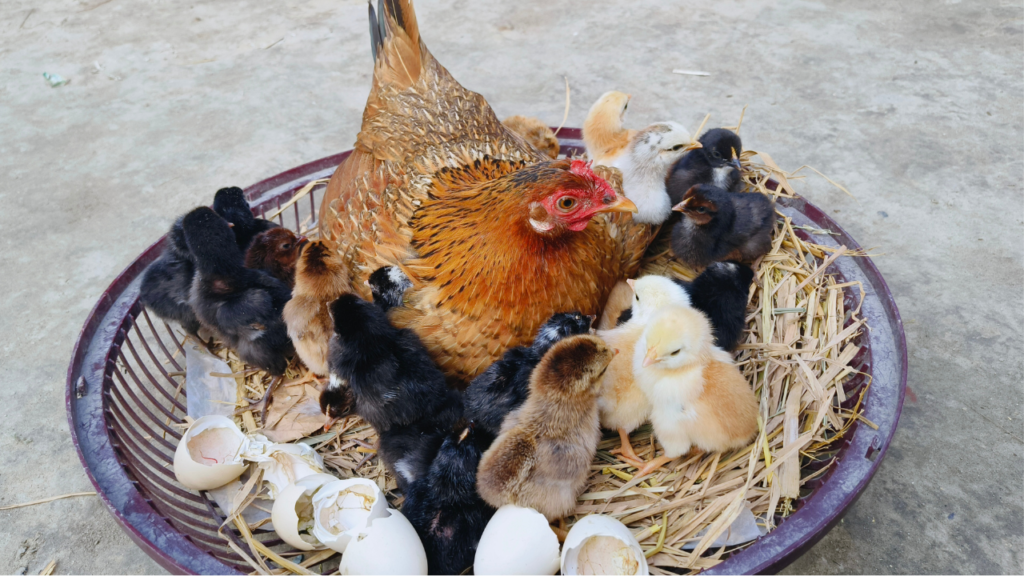
❤️ Step 7: Care for the Hen and Chicks
After hatching:
The hen will keep the chicks warm
Provide clean water and starter feed
Keep them safe from predators
Ensure a dry and warm environment
🌟 Final Tips
Always keep the nesting area clean
Protect the hen from stress and disturbance
Make sure fresh food and water are always available
Let nature do its job—mother hens are excellent caregivers
This natural method is simple, cost-effective, and very satisfying. Watching a mother hen hatch and care for her chicks is truly a beautiful experience! 🐔🥚🐣