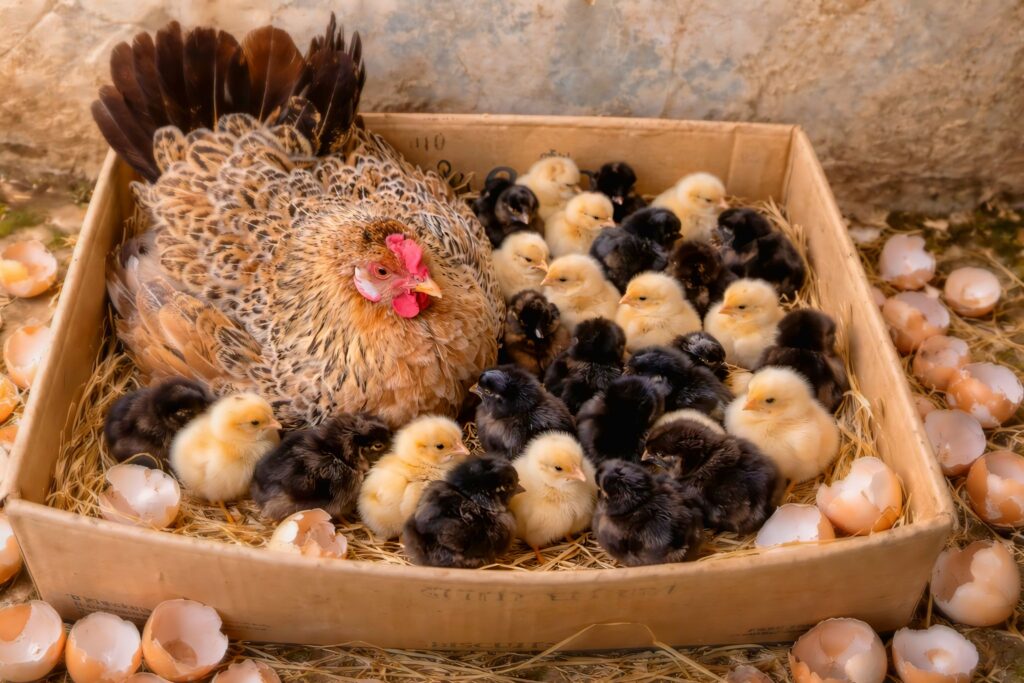
There is something truly magical about watching a mother hen hatch her own chicks. No fancy equipment, no electricity bills, no stress about temperature dials — just a hen doing what nature designed her to do. If you have a broody hen in your backyard flock, you already have one of the most powerful and reliable incubators in the world. This guide will show you exactly how to use her.
📋 Table of Contents
- What Is a Broody Hen and How to Identify One
- Benefits of Natural Hatching vs. Using an Incubator
- Preparing a Safe and Comfortable Nesting Area
- How Many Eggs to Give to a Broody Hen
- Step-by-Step Natural Incubation Process (Day 1 to Hatching)
- Proper Care of the Hen During Incubation
- Signs of Healthy Embryo Development
- Common Mistakes to Avoid
- What to Do After Chicks Hatch
- Tips for Beginners
01. What Is a Broody Hen and How to Identify One
A broody hen is a female chicken that has decided she wants to sit on eggs and hatch them into chicks. It is a completely natural behavior driven by hormones. When a hen goes broody, her body changes — her temperature rises, her egg-laying stops, and her entire focus becomes protecting and warming a clutch of eggs.
Not all hens go broody. Some breeds, like Leghorns, have had this instinct bred out of them over many generations. But breeds like Silkies, Cochins, Orpingtons, Australorps, and Plymouth Rocks are well known for being reliable, dedicated mothers.
🔍 Signs That a Hen Has Gone Broody
- She sits in the nest box for most of the day and night — even when there are no eggs underneath her
- She puffs up her feathers and looks bigger and “fluffed out”
- She makes a low, growling or clucking sound when you come near
- She pecks at your hand if you try to touch or move her
- She has plucked some feathers from her chest and belly — this creates a “brood patch” that transfers her body heat directly to the eggs
- She stops laying eggs completely
- She rarely leaves the nest, eating and drinking very little
- Her droppings become large, dark, and very smelly (known as “broody poops”) because she is not defecating normally
💡 Tip: A hen that has just started sitting is not always fully committed. Wait 2–3 days before giving her eggs to hatch. If she is still sitting firmly after 3 days, she is genuinely broody and ready to work.
02. Benefits of Natural Hatching vs. Using an Incubator
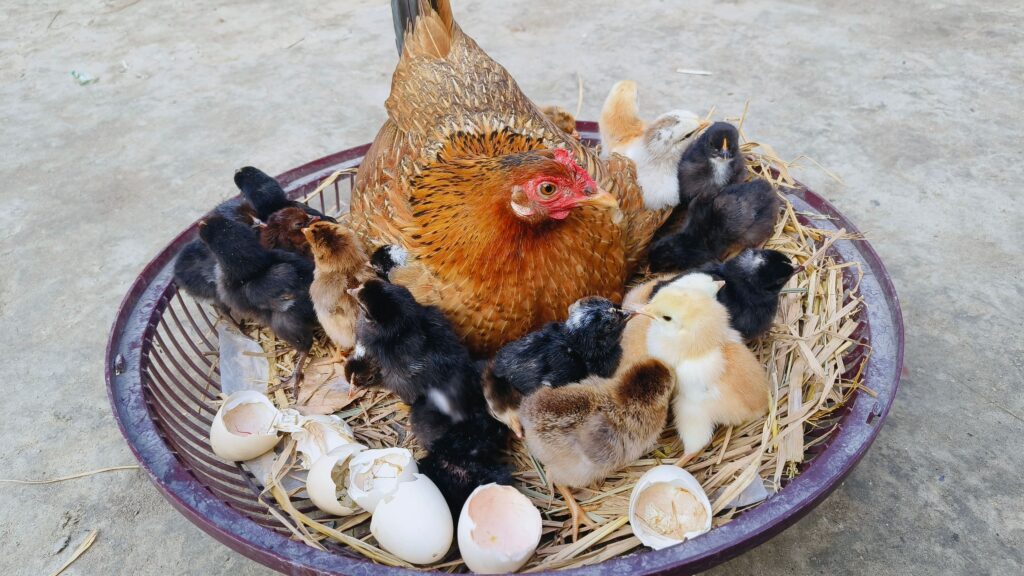
Both methods can produce healthy chicks, but using a broody hen — the natural method — has many advantages, especially for small-scale farmers and backyard keepers.
🐔 Advantages of Using a Broody Hen
- No electricity needed. The hen provides all the heat, humidity, and turning required — completely free of cost
- Better humidity control. A hen naturally adjusts moisture levels through the pores in her skin. This is very hard to replicate with a machine
- She turns the eggs automatically. A good broody hen will turn her eggs many times per day — something you would have to do manually (or pay for in an auto-turn incubator)
- Chicks learn from their mother. Mother-raised chicks learn faster where to find food and water, how to dust-bathe, and how to behave in the flock. They tend to be more confident and social
- Less work for you. Once you set up the nest, the hen does almost everything herself
- Higher hatch rates in many cases. Experienced broody hens often produce better hatch rates than beginner incubator users because they never forget to turn the eggs or forget to add water
- She protects the chicks after hatching. The hen keeps her chicks warm, guards them from danger, and teaches them how to be chickens — which means less work for you in brooding
⚠️ When an Incubator Might Be Better
- You do not have a broody hen available
- You want to hatch a large number of eggs at once
- You need precise breed control over which eggs are incubated
- Your hen abandoned the nest in a previous attempt
💡 Real-Life Advice: Many experienced chicken keepers say that a reliable broody hen is worth more than any incubator they have ever bought. If you have one, treasure her!
03. Preparing a Safe and Comfortable Nesting Area
One of the most important things you can do for a successful hatch is set up the right nesting space. The hen needs to feel safe, calm, and undisturbed. Stress causes hens to abandon nests — and that means losing your eggs.
🏡 Where to Set Up the Nest
- Separate from the main flock if possible. Other hens will disturb a broody hen, lay eggs in her nest, and even break eggs accidentally. A private space prevents a lot of problems
- Low to the ground. Chicks cannot jump from a high nest box. A nest that is close to ground level is much safer once hatching begins
- Quiet and low-traffic. Choose a corner of the coop or a separate small pen away from noise, dogs, cats, and busy areas
- Protected from rain and direct sunlight. Extreme heat or wetness can kill developing embryos
- With easy access to food and water nearby. She should not have to walk far to eat and drink during her rare breaks off the nest
🪹 Setting Up the Nest Box
- Use a wooden box, plastic crate, or cardboard box — at least 30–40 cm (12–16 inches) wide so she can spread out comfortably
- Line the bottom with clean, dry straw or wood shavings — about 5–7 cm (2–3 inches) deep
- Make a small “bowl” shape in the nesting material so the eggs stay together under the hen and do not roll to the edges
- Do not use metal containers — they conduct heat and cold too easily
- Place a small lip or barrier at the entrance (about 5 cm / 2 inches high) to keep eggs from rolling out
⚠️ Warning: If your broody hen is still in the main nesting area of the coop, other hens will try to share her box. This can crack eggs, stress the broody hen, and introduce eggs of different ages into the clutch. Always move her to a private space before giving her the hatching eggs.
🌡️ Temperature and Humidity
The hen manages this herself, but the surrounding environment matters. The ideal ambient temperature in the hatching area is between 18°C and 26°C (65°F–80°F). Avoid drafts and dampness. If you live in a very hot climate, make sure the area is well-ventilated so the hen does not overheat.
04. How Many Eggs to Give to a Broody Hen
The number of eggs depends mostly on the size of the hen. The goal is to give her enough eggs that she can cover all of them completely with her body. Eggs that stick out from under her body will get cold and will not develop properly.
📏 General Egg Numbers by Hen Size
- Small breeds (Silkie, Bantam): 6–8 eggs
- Medium breeds (Sussex, Wyandotte): 10–12 eggs
- Large breeds (Orpington, Brahma): 12–15 eggs
🥚 What Kind of Eggs Can She Hatch?
- The eggs must be fertilized. If you do not have a rooster, the eggs will not hatch — no matter how long she sits on them
- Use fresh eggs — ideally no more than 7 days old from the time they were laid. Older eggs have a lower hatch rate
- Eggs should be clean but not washed. The natural coating on the egg (called the bloom or cuticle) protects it from bacteria. Washing removes this protective layer
- Avoid eggs with cracks, unusual shapes, or very thin shells — these are less likely to hatch successfully
- A broody hen can also hatch duck or turkey eggs in some cases, but the incubation period is different, which can be confusing for the hen
💡 Practical Tip: Gather fertilized eggs over several days and store them pointy-end down in a cool room (around 15°C / 59°F) until you are ready to place them all under the hen at the same time. This way, all eggs start development together and should hatch within hours of each other.
05. Step-by-Step Natural Incubation Process (Day 1 to Hatching)
Chicken eggs take approximately 21 days to hatch under a broody hen. Here is what happens at each stage and what you should (and should not) do.
Day1. Setting the Eggs
Place all the eggs under the hen at the same time, in the evening. Eggs placed at different times will hatch at different times, which is messy and stressful. Mark each egg lightly with a pencil “X” so you can tell which ones belong to this clutch and remove any new eggs laid by other hens. Leave the hen alone and let her settle. Resist the urge to check on her constantly — she knows what she is doing.
Days1–7. Early Development
The embryo begins developing. You will not see any visible changes. The hen is doing all the work — keeping the eggs at approximately 37.5°C (99.5°F) and turning them regularly. Check on her once or twice daily — just a gentle look to make sure she is eating and there are no broken eggs. Remove any broken eggs immediately as they attract flies and bacteria.
Day 7. First Candling (Optional)
You can “candle” the eggs to check for development. Candling means shining a bright light through the egg in a dark room. A developing egg will show a network of tiny red blood vessels and a small dark spot (the embryo). An infertile egg will look clear. A dead embryo may show a “blood ring” — a circle of blood with no growth. Remove infertile or dead eggs from the nest to prevent them from rotting and exploding, which can contaminate the healthy eggs.
Days8–18. Active Growth Period
The chick is growing rapidly inside the egg. The hen continues to turn, warm, and protect the eggs. By Day 14 candling, you should see a large dark mass filling most of the egg with a visible air cell at the blunt end. Continue your daily welfare checks on the hen. Keep the nest clean and dry.
Day18. “Lockdown” Period Begins
Do not disturb the nest from now on. The chicks are getting into hatching position inside the eggs. The hen will naturally stop turning the eggs at this stage. Do not candle or move the eggs. Avoid lifting the hen unless absolutely necessary. This is the most sensitive period.
Day19–20. “Pipping” – The Chick Breaks Through
You may hear soft cheeping sounds coming from under the hen — this is the chicks calling from inside the eggs! The chick uses its “egg tooth” (a tiny hard tip on its beak) to crack the first small hole in the shell. This is called pipping. It is a huge milestone. Do not try to help the chick hatch. It needs to struggle through this process to build up strength. Interfering almost always does more harm than good.
Day21. Hatching Day! 🐣
Most chicks hatch on Day 21, though some may hatch on Day 20 or take until Day 22 or 23. After pipping, the chick “zips” around the shell in a circle and pushes out. Newly hatched chicks are wet and exhausted. They will dry off under the hen within a few hours and become the fluffy, adorable chicks you know. Wait until all eggs have either hatched or are confirmed as non-viable before disturbing the nest.
💡 Important Note on Timing: Do not panic if one or two chicks hatch a day late. Hatch times can vary by 24–48 hours depending on egg age, breed, and the hen’s body temperature. If no pip is visible by Day 23, those eggs are likely not going to hatch.
06. Proper Care of the Hen During Incubation
A dedicated broody hen is so focused on her eggs that she will sometimes forget to take care of herself. Your job is to make sure she stays healthy through the 21-day process.
🍚 Feeding
- Place food and water very close to the nest — ideally within 1–2 steps away
- Use layer pellets or grains as her main feed
- Add a small amount of calcium supplement (crushed oyster shell) to support her after 21 days of reduced egg-laying
- Offer a small treat of corn or scratch grains to encourage her to get off the nest once a day to eat, drink, and defecate
- Some broody hens need gentle encouragement to leave the nest — it is fine to gently lift her off once a day for 15–20 minutes so she can eat, drink, poop, dust-bathe quickly, and get some fresh air
💧 Water
- Fresh, clean water must be available at all times near the nest
- In hot weather, check the water twice a day — dehydration can cause a hen to abandon her nest
- Use a shallow, stable water container so chicks do not fall in after they hatch
🐜 Pest Control
- Check the hen regularly for mites and lice — parasites love to attack hens that cannot move freely to dust-bathe
- Dust the nest lightly with food-grade diatomaceous earth before setting eggs to repel mites naturally
- If you find mites, treat with a poultry-safe powder but avoid chemical sprays near the eggs
🔒 Safety
- Make sure the nesting area is fully protected from predators — rats, snakes, weasels, and cats can destroy a clutch in minutes
- Use hardware cloth (not chicken wire) for any fencing — small predators can reach through chicken wire
- Lock the hen in safely at night
- Keep other animals, including your other chickens, away from the broody hen’s space
⚠️ Watch For This: If a hen loses a lot of weight or looks very weak during incubation, she may need extra encouragement to eat. A hen that becomes dangerously thin may need to be removed from the nest for a few days to recover, which unfortunately ends the hatch. Prevention is better — monitor her food intake from Day 1.
07. Signs of Healthy Embryo Development
When you candle your eggs (hold them up to a bright light in a dark room), you can check whether the embryos are developing normally. Here is what healthy development looks like versus what to watch for.
✅ Healthy Signs
- Day 7: Clear red blood vessel “spider web” pattern visible
- Day 7: A tiny moving dark spot — the embryo
- Day 14: Dark mass filling most of the egg interior
- Day 14: Defined air cell at the blunt end of the egg
- Day 18–20: Air cell is large; dark mass fills nearly all space
- Day 20–21: Movement visible; egg may wobble on its own
- Egg feels heavier than an unfertilized egg
❌ Problem Signs
- Completely clear egg after Day 7 = infertile
- “Blood ring” pattern = early embryo death
- Dark liquid or rotten smell = bacterial contamination
- Egg feels unusually light = likely not developing
- No movement or pipping by Day 22–23 = likely not viable
- Green, black, or purple discolouration of the egg shell
💡 Candling Tips for Beginners: Use a small torch or a purpose-made egg Candler (very cheap online). Do candling quickly — do not keep the egg out from under the hen for more than 30–60 seconds. Dark-shelled eggs (brown, green, blue) are harder to candle than white-shelled eggs. If you are unsure, put the egg back and check again a few days later.
08. Common Mistakes to Avoid
1. Giving Eggs to a Hen That Is Not Fully Broody Yet
If you place eggs under a hen that is only “half broody,” she may abandon the nest within a week. Always wait 2–3 days to confirm she is truly committed before introducing hatching eggs.
2. Leaving Her in the Main Coop Without Protection
Other hens will compete for the nest box, lay eggs with different dates, trample the clutch, and generally cause chaos. Always move a broody hen to a private, protected space.
3. Checking the Nest Too Often
Every time you disturb the hen, you let warm air escape and cause her stress. A quick daily welfare check is enough. During the last 3 days (Days 19–21), try not to disturb her at all.
4. Helping Chicks Hatch from Their Shells
It is extremely tempting to help a struggling chick, but this is almost always a mistake. The struggle to break out of the shell is how chicks absorb the last of the yolk sac and build the strength they need to survive. Only intervene if a chick has pipped but made no progress in over 24 hours, and only with proper guidance.
5. Using Washed or Old Eggs
Washed eggs have lost their protective bloom and are much more likely to become infected with bacteria. Eggs older than 10 days from laying have significantly lower hatch rates. Use clean, fresh, unwashed, fertilized eggs only.
6. Giving Her Too Many Eggs
Eggs that cannot fit under the hen’s body will get cold and die. It is better to give fewer eggs that are all well-covered than to overload her and lose half the clutch.
7. Neglecting to Remove Rotten Eggs
A rotten egg can explode (it really does happen!) and cover the remaining healthy eggs in bacteria-laden liquid, which can kill developing embryos. Always candle and remove non-viable eggs by Day 10.
8. Not Protecting Against Predators
A broody hen is vulnerable because she will not leave her eggs even when danger approaches. Make sure her space is properly secured every single night without fail.
09. What to Do After the Chicks Hatch
The work is not over when the chicks pop out — in fact, the next few days are critical for the survival of the newborns. Here is what to do once the hatch is complete.
🐥 In the First 24–48 Hours
- Leave the chicks with the hen. Newly hatched chicks do not need food or water for the first 24–48 hours because they are still absorbing nutrients from the egg yolk. Let the hen keep them warm and do not separate them
- Wait for the full hatch to complete before removing unhatched eggs. Give it until Day 23–24 before giving up on any remaining eggs
- Remove any broken shell pieces from the nest — shells can trap chicks or confuse the hen
- Keep the nest area clean, dry, and warm
🌱 Setting Up for Mother Hen and Chicks
- Offer chick starter crumble — not layer pellets (too much calcium is harmful for young chicks). The hen can eat chick starter too; it will not hurt her
- Use a shallow water dish with pebbles or marbles in it — deep water is a drowning risk for tiny chicks
- Make sure there are no gaps in the pen through which chicks can escape or predators can enter
- The floor should be easy for chicks to walk on — avoid slippery surfaces like newspaper. Use straw, wood shavings, or a rubber mat
🐓 Reintroducing the Family to the Flock
- Wait until the chicks are at least 3–4 weeks old before introducing them to the main flock
- Let the flock see the chicks through a fence first, for a few days, before direct contact
- The mother hen will generally protect her chicks from other adult chickens — but monitor closely in the first few days after integration
- Provide extra feeding stations so young chicks can eat without being chased away by larger birds
💡 Heartwarming Truth: A good mother hen is a wonder to watch. She will call her chicks with a soft clucking sound to show them food, spread her wings wide at night to keep them warm, and puff up fiercely at anything that approaches her babies. Let her do her job — you will be amazed.
10. Tips for Beginners
If this is your first time hatching eggs with a broody hen, here are some golden rules to keep in mind.
- Start small. Give her only 6–8 eggs for your first hatch. A smaller clutch is easier to manage and reduces stress if some eggs do not develop.
- Keep a journal. Note the date you set the eggs, the number of eggs, candle results, and any observations. This helps you learn and improve with each hatch.
- Trust the hen. A healthy, committed broody hen has thousands of years of instinct behind her. She knows the right temperature, the right humidity, and when to turn the eggs. Your main job is to keep her safe and well-fed.
- Learn to candle before you need to. Practice candling with a freshly laid egg first so you know what an unfertilized egg looks like. This makes it much easier to read results under real conditions.
- Have a plan for failed eggs. Not every egg in every hatch will develop. A 70–80% hatch rate is considered very good. Do not be discouraged if some eggs are infertile or do not make it — this is completely normal.
- Do not introduce new eggs mid-hatch. Once your hen has been sitting for a week, do not add fresh eggs. They will hatch later than the original clutch, and the hen may abandon the late eggs to care for the early chicks.
- Choose the right breed next time. If your current hen is not going broody, consider adding a Silkie or Cochin to your flock — they are famous for being excellent, reliable mothers.
- Enjoy the process. Watching chicks hatch and grow under a mother hen is one of the most rewarding things about keeping chickens. Take photos, slow down, and appreciate it — it never gets old.
💡 Final Beginner Encouragement: Your first hatch might not be perfect, and that is completely okay. Every experienced chicken keeper started exactly where you are. With each hatch, you will learn something new. A broody hen is forgiving and nature is resilient. Give it a try — you may be surprised at how well it goes.
🐓 🥚 🐣
Ready to Let Nature Work Its Magic?
Hatching eggs with a broody hen is one of the most natural, rewarding, and cost-effective ways to grow your flock. Set her up well, keep her safe, trust her instincts, and in just 21 days you will have a nest full of healthy, happy chicks ready to explore the world.
Happy hatching! 🌾.